Insight Visit
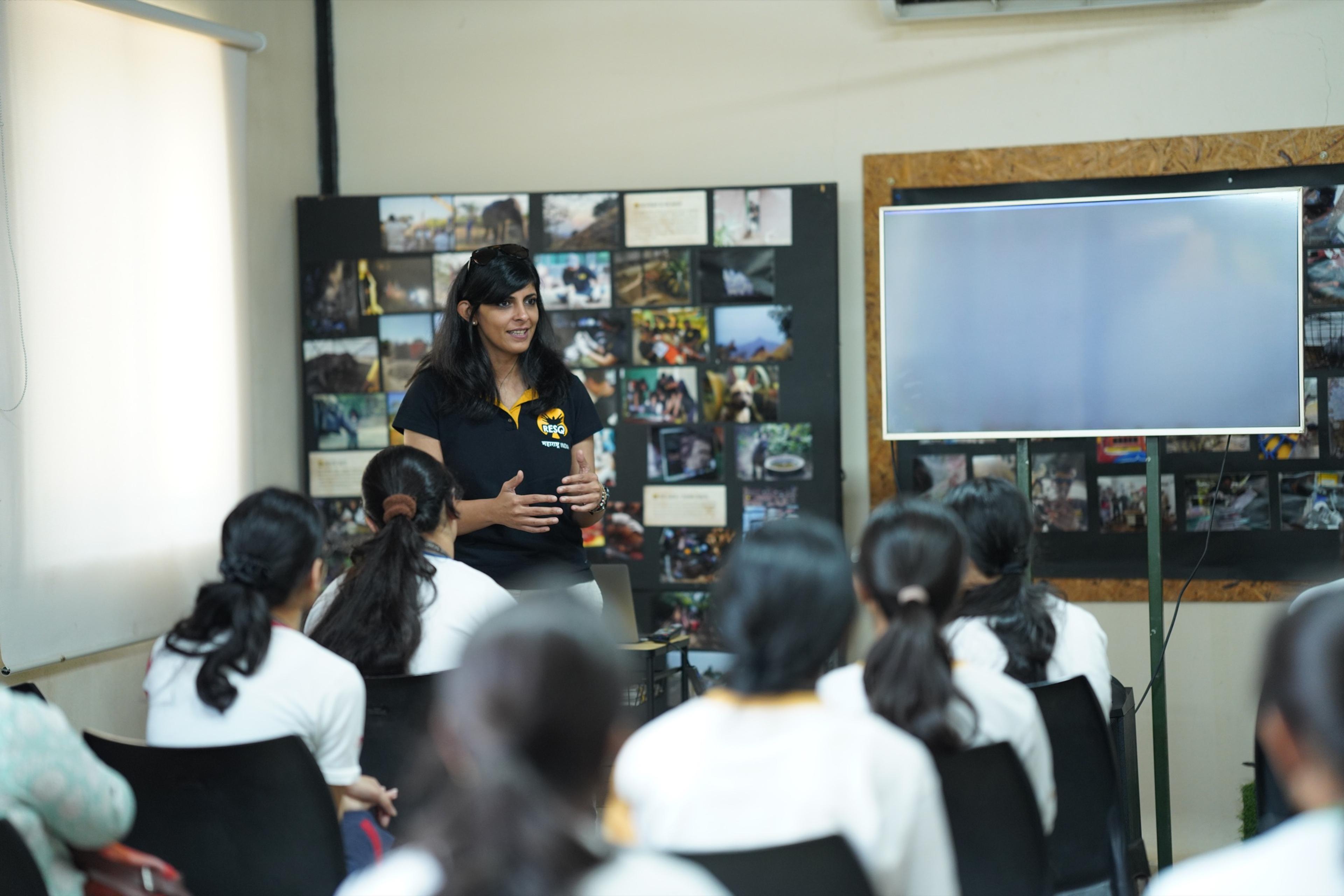
Two hours inside a working rescue and rehabilitation centre, with the people who run it. You will hear how a wildlife emergency is answered, from the moment the helpline rings to the moment an animal is released, and how often that sequence breaks. You will see the treatment facilities and meet the veterinarians, the rescuers, and the people who talk to housing societies about snakes.
Good to know
Please read the Code of Conduct first: it takes four minutes.
Why visit
Answering them is the point. The goal of an Insight Visit is simple: that you leave more aware of wildlife, and more sensitive to the challenges at the human-wildlife interface, than when you arrived.
Awareness travels. When one person carries accurate information home, it spreads to a family, a workplace, a housing society, and somewhere in that ripple, advocates for wildlife are born and multiply. Every visit is a small investment in that.
Who comes
Nature enthusiasts, students, supporters, and people who have wondered what happens to the leopard after the news bulletin ends, or who want to see what their contributions do.
Existing partners, prospective ones, and organisations whose employees want to understand what their contributions do.
NGOs, Forest Department officers, government departments, veterinary and academic institutions. If your visit has a professional purpose, tell us in your request and we will build the two hours around it.
Visitors must be 10 or over. The visit asks for quiet, sustained attention close to animals recovering from injury, and that is not fair to ask of younger children.
What happens on the day
Our team photographs your visit and shares the images with you. Visitors may not photograph, film or record anywhere on site: an animal's location, a clinical procedure, a rescue vehicle and a colleague's face are not ours to publish, and some are dangerous to.
Ten people on site at a time, in two groups of five. Corporate and institutional groups of up to 25 visit in parts; tell us your numbers and we will propose a schedule.
None. If you would like to support the work you have seen, we will tell you how, once, and only if you ask.
How it works
What we need from you: the request form with your preferred date and time, the waiver (agreed inside the form), and ID from the person booking, or the group coordinator.
Please read the Code of Conduct first; it takes four minutes and explains why we ask what we ask.